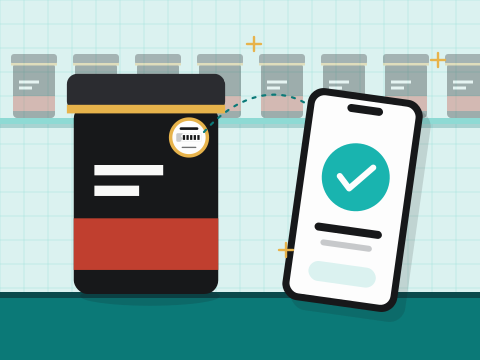
The brief said app. The answer was a web page.
20 November 2026
A brief describes a solution the client has already imagined. The job is to find the problem underneath it, and to spend the budget where the problem is.
The brief
Optimum Nutrition asked for an app. The goal was sound: let a buyer check that the product in their hand is genuine. I was at Analyzen, and the request arrived the way most requests do, with the answer already attached.
The question behind it
Before designing anything, I asked who would be checking, where, and how often.
The answer was a buyer holding one tub, once. Nobody installs an app to ask one question. A web page answers the doubt where it happens: scan, check, done.
So the app was the wrong container. That was the smaller finding.
Where the problem was
The bigger one sat behind the screen. Many distributors across many markets print the stickers that prove a product is genuine. If each of them generates its own codes, codes can repeat, and a code that repeats proves nothing.
The money saved by not building an app went there instead: one central engine that issues every code. Distributors still print the stickers. They no longer decide what is on them.
What it made possible
Because every code comes from one place, a check in one market means the same thing as a check in another. That also gave management a way to keep genuine products moving through the authorised dealers for each market.
The client was convinced once they saw the value in it. They had asked for an app; what they wanted was certainty, and the engine was where the certainty came from.
Where it is now
The system has been live since 2019 and runs in 21 countries: 6 in Southeast Asia, 14 in MENA, plus Taiwan. It has issued 4.7M codes, and buyers have verified more than 500K products.
When to push back
The goal is to look at the full operational chain (sometimes it's a tree with many parallel branches) and find where the real problem lies. Clients often come with a partial picture, thinking they have already solved it. As a resolver, I take it upon myself to methodically test the proposed solution against every other possible alternative before agreeing to it. Pushing back comes in when one or more alternatives show significant merit over what the client proposed in the first place. Then comes convincing the client, which is a whole other skill set. Maybe I'll cover it in another note.